Skip to content

Building a just economy for people and the planet.

The Institute for Economic Justice (IEJ) is a progressive policy think tank based in South Africa, working to advance economic justice, dismantle inequality, and drive systemic change.

Learn more about us Explore our work

Latest from the IEJ

Stay informed by engaging with our latest research on economic justice.

Our work transforms systems, shifts narratives, and builds power.

From universal basic income to feminist economics and climate justice, we partner with civil society and government to advance rights, equity, and economic transformation.
In The media

Read how our work is shaping conversations locally, regionally, and globally.

SAfm
Hilaal TV
SABC News
SABC News

IEJ Events

Join our report launches, workshops, policy dialogues, and media briefings.

08 Oct Thursday
Thursday, 8 October 2026 - Friday, 9 October 2026
View Details
Making Africa’s Energy Transition Work: Local Manufacturing, Decent Work, and Sustainable Livelihoods

On 8 and 9 October 2026, researchers, trade unionists, policymakers, manufacturers, small and medium enterprises, and civil society organisations from across Africa will meet in Johannesburg to examine how the continent’s energy transition can support local manufacturing, decent work, and sustainable livelihoods.

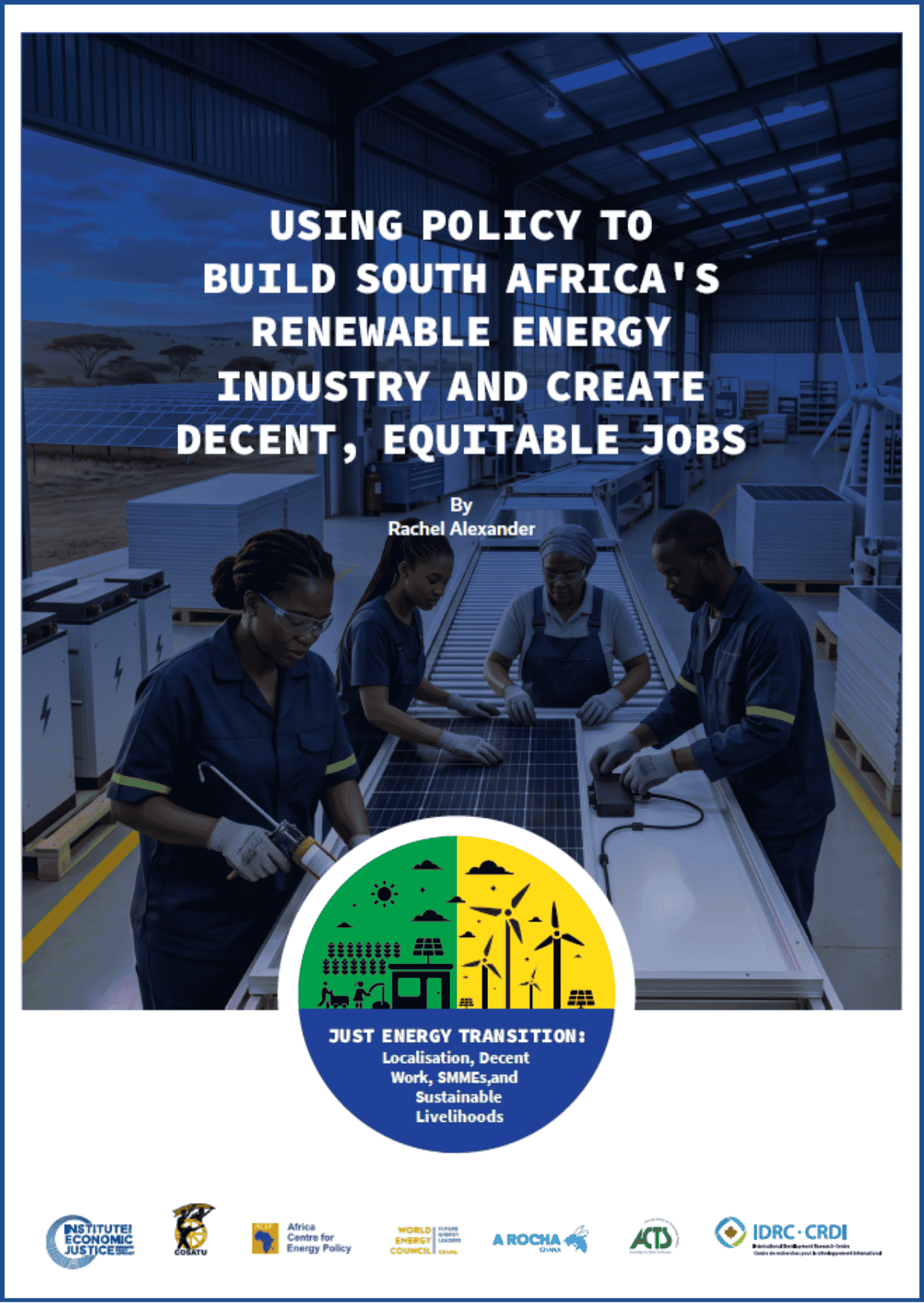
The conference, Making Africa’s Energy Transition Work: Local Manufacturing, Decent Work, and Sustainable Livelihoods, will present and discuss research undertaken in Ghana, Kenya, and South Africa as part of the Just Energy Transition: Localisation, Decent Work, SMEs, and Sustainable Livelihoods project.


Africa’s energy transition could expand access to sustainable energy while supporting industrial development, employment creation, and more resilient local economies. These outcomes will not, however, emerge automatically from increased investment in renewable energy.

Without deliberate intervention, African countries may continue to export raw materials and import high-value technologies, while much of the manufacturing value, productive capacity, and profit associated with the transition is retained elsewhere.

Making Africa’s Energy Transition Work: Local Manufacturing, Decent Work, and Sustainable Livelihoods, taking place in Johannesburg on 8 and 9 October 2026, will examine what is required to build more just and developmental renewable energy value chains.

The conference will bring together researchers, trade unionists, manufacturers, small and medium enterprises, community representatives, policymakers, and experts from Ghana, Kenya, South Africa, and beyond.

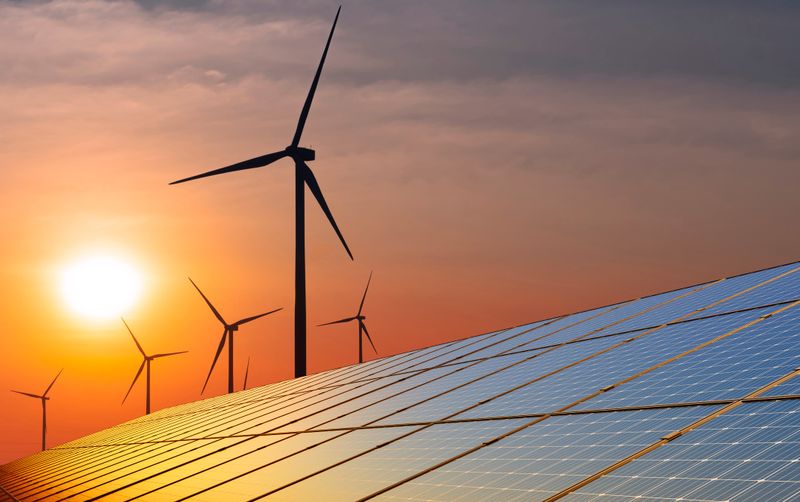
Drawing on research into renewable energy components and production networks, including solar panels, batteries, inverters, and wind towers, participants will consider:

  • opportunities for local and regional renewable energy manufacturing;
  • the barriers confronting SMEs entering renewable energy value chains;
  • the potential for decent work and sustainable livelihoods;
  • the gendered organisation of paid and unpaid work;
  • coordination between energy, industrial, trade, and environmental policy;
  • cooperation between organised labour and domestic industry;
  • energy poverty and access to affordable power; and
  • lessons from international energy and industrial transitions.

The conference will also provide a platform for the presentation and discussion of country case studies from Ghana, Kenya, and South Africa. These studies examine how public policy can strengthen domestic productive capacity and ensure that workers, women, communities, and local enterprises benefit meaningfully from the transition.

The conference forms part of the Just Energy Transition: Localisation, Decent Work, Small and Medium Enterprises, and Sustainable Livelihoods project.

The project is undertaken by the Institute for Economic Justice, the Congress of South African Trade Unions, the African Centre for Technology Studies, the African Centre for Energy Policy, A Rocha Ghana, and World Energy Council: Future Energy Leaders Ghana, with funding from the International Development Research Centre.

More details soon.

Help us advance
economic justice

Your support fuels evidence-based advocacy, inclusive policymaking, and a more equitable future.

Donate now
Back To Top